Quick answer
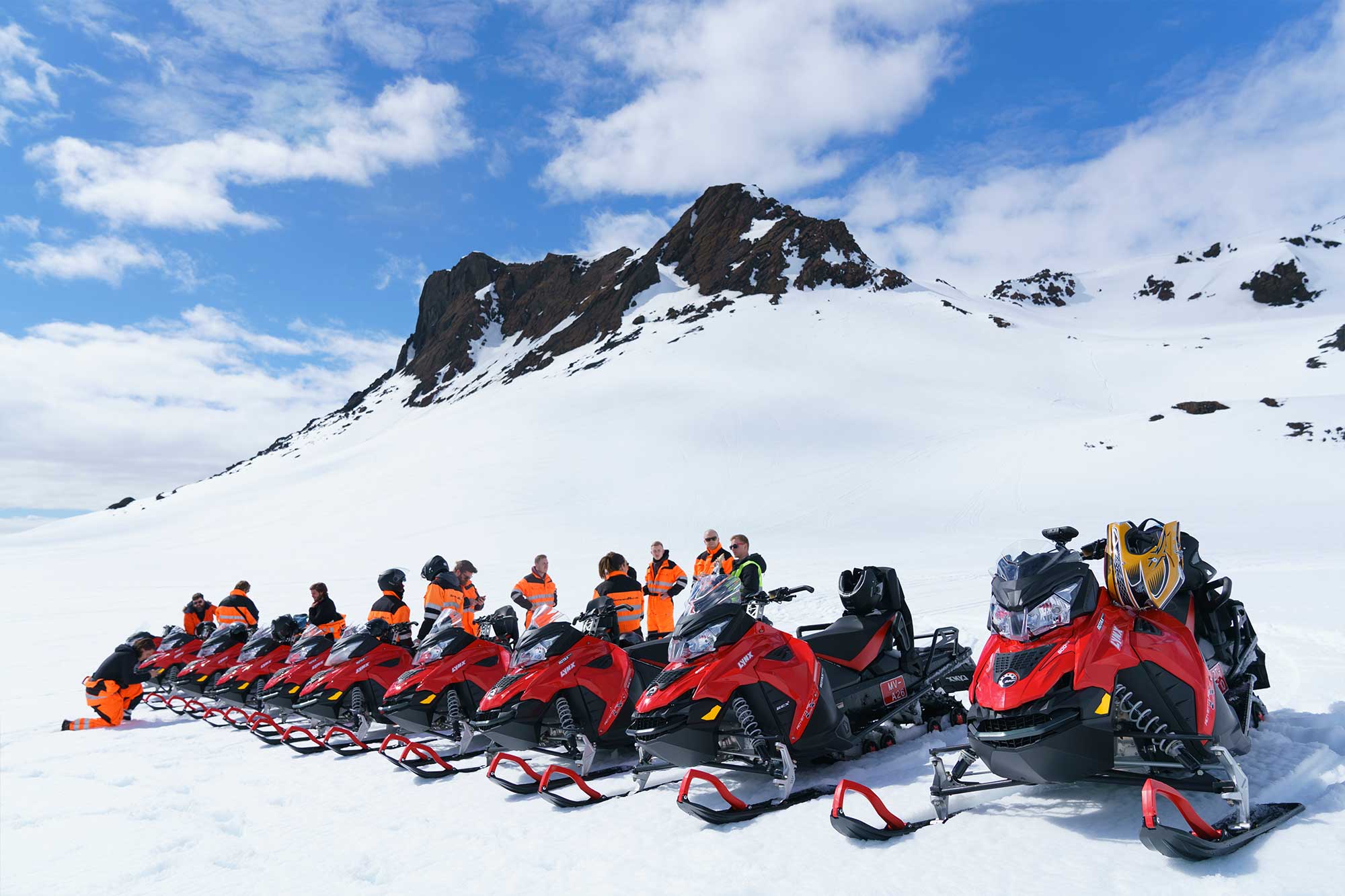
Snowmobiling on Langjökull offers a legitimate way to traverse Iceland's highland ice cap, with most riders citing the scale of the glacier and the hour-long ride across open snow fields as the core value. Tours operate year-round from base camps in the West Iceland Highlands, accessed only via super jeep or specialized vehicles. The experience depends heavily on weather—clear days provide visibility across the ice cap to surrounding peaks, while storms reduce it to a white-out trudge. If riding motorized vehicles on remote glacial terrain appeals and your budget accommodates the tour cost, the activity delivers what it promises.
Langjökull covers 935 square kilometers of West Iceland's highlands, making it the country's second-largest glacier and one of the few with year-round snowmobile access. The ice cap sits at elevations between 1,200 and 1,450 meters, exposed to weather systems that sweep in from the Atlantic with little warning. Tours depart from base camps reachable only by modified vehicles, a logistical reality that shapes both the structure and cost of every trip. Riders spend roughly one hour on the glacier itself, guided in convoys of six to twelve snowmobiles depending on group size. The route crosses the southern plateau, a relatively flat expanse where visibility determines whether you see the Eiríksjökull massif to the north or simply white in every direction. Guides maintain fixed speeds and stop points, prioritizing safety over exploration. No prior snowmobile experience is required, but the machines demand attention—throttle control on ice differs from dirt, and wind gusts at elevation can push a sled off line if you are not prepared. The value proposition rests on whether an hour of glacier riding justifies the total time and financial commitment. Most tours require four to five hours door-to-door from Reykjavik, including the super jeep transfer to and from the ice. The cost reflects fuel, specialized vehicles, guide certification, and glacier access permits. Weather cancellations are common, particularly in winter when storms can close the highland roads for days. Operators typically offer rebooking or refunds, but tight itineraries leave little room for rescheduling. Is snowmobiling in Iceland worth it? The answer depends on what you are comparing it against. If you want direct physical engagement with Iceland's glacial interior and accept the weather risk, Langjökull delivers a functional way to do that. If you prioritize reliability or prefer observation over operation, helicopter tours or glacier hikes offer alternatives with different trade-offs. The glacier itself is indifferent to your presence—the question is whether spending an hour crossing it aligns with how you want to spend your time and money in Iceland.
“The glacier itself is indifferent to your presence—the question is whether spending an hour crossing it aligns with how you want to spend your time and money in Iceland.”
When Is Snowmobiling in Iceland Worth It? Assessing Seasonal and Daily Windows
The optimal time for snowmobiling on Langjökull is during the morning hours, specifically within the 08:00–12:00 arrival window. Selecting this period provides the highest probability of stable atmospheric conditions and clear visibility across the glacier.
Late Autumn (Oct–Nov)
Low density; quiet trailsCold, short days; 0°C to -5°C
Experience early-season snow with fewer visitors. Provides a stark, high-contrast landscape.
Winter (Dec–Mar)
Moderate; peak around holidaysFrequent storms; -15°C to -2°C
Deep snow coverage allows for full glacier access. Expect colder temperatures and shorter daylight hours.
Spring (Apr–May)
Moderate; steady flowVariable; -5°C to 2°C
Lengthening daylight hours improve visibility. The snow remains firm enough for consistent riding.
Weekday mornings
Minimal congestion—
Early arrivals experience calmer winds and clearer skies before afternoon shifts in weather patterns.
Verdict: For the most consistent experience, aim for weekday mornings between 08:00–12:00 during the months of April or October.
Is Snowmobiling in Iceland Worth It: Understanding Costs and Glacier Access
Access to Langjökull Glacier itself is free of charge. However, safety regulations require all snowmobiling activities to be conducted via professional guided tours.
While glacier access is 0 ISK, visitors pay for professional snowmobile tours, with final costs determined by the specific tour duration and operator chosen.
Is Snowmobiling in Iceland Worth It: Logistics of Reaching Langjökull
Langjökull Glacier is located in the West Iceland Highlands and is accessible primarily via organized tours or high-clearance 4x4 vehicles. Due to the challenging terrain of the mountain roads leading to the glacier base, joining a guided tour with provided transfers is the recommended approach for most visitors.
Road 550 (Kaldidalur) or Road F35 (Kjölur) to glacier base
Organized tour operator transfer from Reykjavik
Pre-Visit Checklist for Snowmobiling in Iceland
Complete these steps before heading to Langjökull to ensure a safe and smooth glacier experience.
-
Book your snowmobile tour in advance — Operators require reservations; glacier access is only via guided tours.
-
Bring your valid driver's license — Required to operate a snowmobile under Icelandic law.
-
Pack waterproof outer layers and warm base layers — Glacier winds drop temperatures significantly, even in summer.
-
Wear sturdy closed-toe boots — Open footwear is unsafe on snow and not permitted.
-
Confirm your pickup time and location — Tour operators coordinate transport from designated meeting points.
-
Arrive during the 08:00–12:00 window — Morning departures offer clearer skies and calmer conditions.
Geological Context: Why Snowmobiling in Iceland Is Worth It
Langjökull serves as a significant geographical landmark in Iceland, offering insights into the island's volcanic and glacial history. Understanding these physical characteristics provides context for the scale of the environment experienced during snowmobile tours.
925 square kilometers total area
Langjökull is the second-largest ice cap in Iceland, covering an area of approximately 925 square kilometers. Its vast surface provides a consistent environment for glacial activities throughout the year.
1,450 meters peak elevation
The highest point of the glacier reaches an elevation of approximately 1,450 meters above sea level. This altitude contributes to the persistent snow cover and stable ice conditions found across the plateau.
580 meters maximum ice thickness
Measurements indicate that the ice thickness in the deepest sections of Langjökull reaches up to 580 meters. This accumulation represents centuries of compacted snowfall and glacial development.
Volcanic foundation
The glacier rests upon a broad hyaloclastite mountain range formed by volcanic activity under the ice. This geological base influences the landscape features visible during expeditions across the surface.
Long glacier name
The name Langjökull translates literally to Long Glacier in Icelandic. This name refers to its elongated shape, which stretches across the western highlands of the country.
Water source for geysers
Meltwater from Langjökull feeds into various river systems and underground aquifers in the surrounding regions. These hydrological networks are connected to the geothermal activity that defines the nearby Haukadalur valley.
Check availability
Frequently asked questions about snowmobiling in Iceland
Everything you need to know about is snowmobiling in iceland worth it